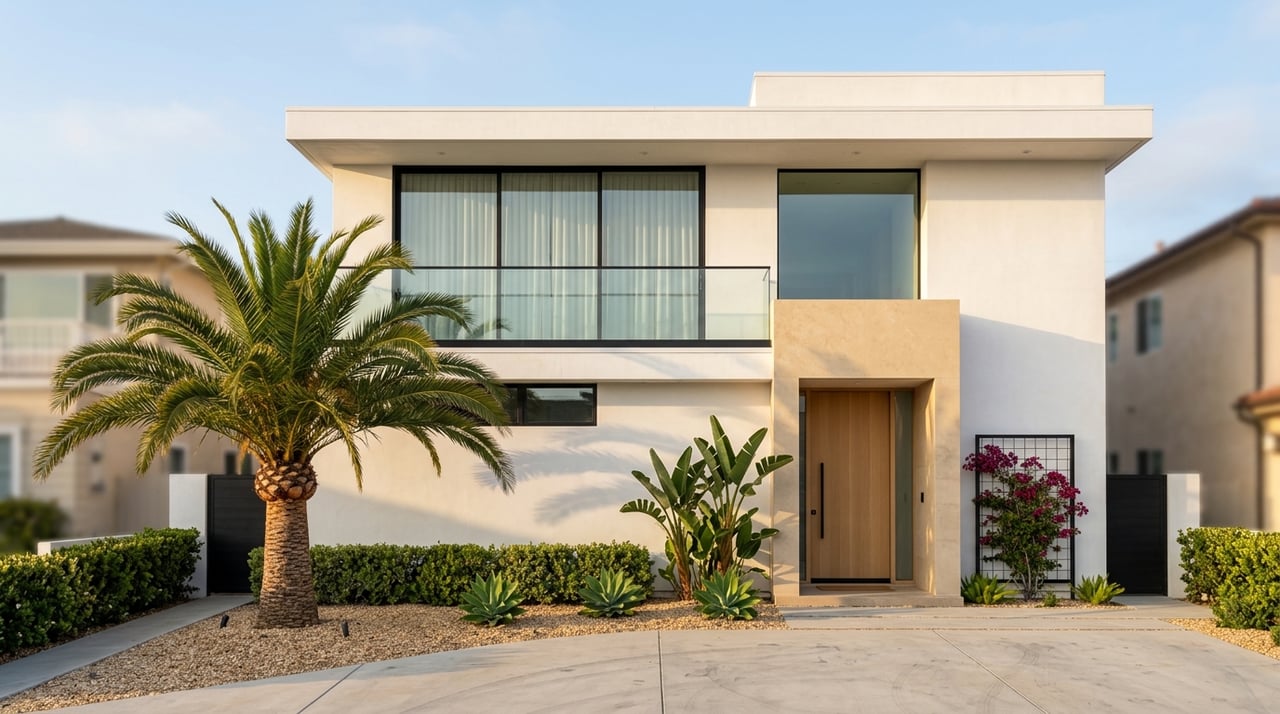
A second home in Newport Beach can be a dream purchase, but it is also a decision that deserves careful math. Between high entry prices, location-specific risks, carrying costs, and rental rules, the right property on paper is not always the right property in practice. If you are thinking about buying a second home here, you need a clear way to evaluate lifestyle fit, ownership costs, and long-term flexibility. Let’s dive in.
Start With Market Reality
Newport Beach is a premium coastal market, and pricing reflects that. Recent market snapshots show typical home values around $3.7 million, with median sale prices roughly in the low-to-mid $3 million range depending on the source and time period. Those figures vary by platform, so it is best to treat them as directional rather than exact.
That matters because a second home usually competes with other financial priorities. You want to go in with a realistic acquisition budget and a clear view of how much capital you want tied up in a part-time residence. In Newport Beach, this is not usually a market where you can count on a quick resale to solve a planning mistake.
Recent reporting also suggests that while the market remains active, resale timing can vary. Median time to pending and days on market differ by source, with figures ranging from about three weeks to nearly two months. The practical takeaway is simple: buy a home you can comfortably hold, not one you assume you can flip out of quickly.
Focus On Location Fit
In Newport Beach, location can shape your ownership experience just as much as the home itself. The city identifies three broad geographic areas: low elevation areas in West Newport, Balboa Peninsula, and Newport Bay; elevated marine terrace areas such as Newport Heights and Westcliff; and higher-relief terrain in the San Joaquin Hills, including Newport Coast.
For a second-home buyer, those differences can affect views, access, and how easy the property is to use year-round. A low-lying property may offer a very different ownership profile than a home on more elevated ground. If you plan to come and go often, the practical side of location matters just as much as the scenery.
Flood exposure should be part of your evaluation early, not late. The City of Newport Beach notes that flood hazard areas are subject to periodic inundation and provides a property-by-address FEMA flood-zone lookup. The city also explains that mortgage lenders use FEMA flood maps to determine whether flood insurance is required for federally backed loans on properties in severe flood hazard zones.
Evaluate How You Will Actually Use It
A second home should support your real habits, not just your idealized ones. Before you look too hard at finishes and views, think about how often you plan to visit, who will use the property, and what kind of upkeep you are willing to manage from a distance.
Detached homes may offer more privacy and control. Condos and townhomes may reduce exterior maintenance, which can be attractive if you will not be there full time. At the same time, attached properties can come with HOA dues, rules, and use restrictions that may affect how flexible the home feels.
If a property sits within an HOA, the city specifically advises owners to review CC&Rs before advertising or applying for licenses and permits. That step is especially important if you are even considering future rental use. A home that looks simple at first glance can become much more limited once HOA rules are part of the picture.
Check Parking And Access Carefully
In Newport Beach, parking is more than a convenience item. It can directly affect daily usability for you and your guests. This is one of those details that is easy to underestimate during a showing and hard to ignore after closing.
City short-term-lodging conditions require all available on-site parking spaces to be made available to guests and warn that street parking may not be available. Even if you do not plan to rent right away, that guidance tells you something important about Newport Beach living. Garage size, driveway layout, guest parking, and ease of loading in and out all deserve close attention.
For a part-time residence, convenience has real value. If arriving for a weekend feels like a production every time, the home may not deliver the lifestyle you expected. Good access and workable parking can make a second home far easier to enjoy.
Model Carrying Costs Early
The purchase price is only part of the story. In Newport Beach, carrying costs can materially affect whether a second home still feels like a good decision a year or two after closing. You want to underwrite those costs before you fall in love with a property.
Property taxes are a major line item. Orange County explains that under California Proposition 13, assessed value generally resets on a reassessable change of ownership or new construction. The county also notes that tax rates include the 1% basic levy plus any bonded indebtedness, special assessments, or Mello-Roos that apply to the parcel.
New owners may also receive a supplemental assessment and supplemental tax bill after closing, often outside escrow. Orange County states that annual secured tax bills are mailed in September, with installments due November 1 and February 1. Supplemental tax bills are prorated from the date of transfer through June 30.
That means your cash planning should go beyond down payment and closing costs. A second-home purchase can bring early post-closing tax adjustments that catch buyers off guard if they have not built in reserves. In a high-value market, that reserve planning matters.
Plan For Insurance And Risk
Insurance should be part of your evaluation, not just a final checklist item. In coastal and lower-elevation settings, your premium and coverage structure can affect the true monthly cost of ownership.
Because lenders use FEMA flood maps to determine flood insurance requirements for certain loans, a property’s flood-zone status can shape both financing and ongoing costs. Even if insurance is not required, the broader risk profile of the location is still worth understanding before you commit.
For a second home, risk planning also includes practical ownership questions. If the property sits vacant for stretches, how comfortable are you with the location, access, and maintenance demands? The most enjoyable second-home purchases tend to be the ones where the ownership profile matches the buyer’s tolerance for complexity.
Be Realistic About Rental Strategy
Many second-home buyers like the idea of offsetting costs with rental income. In Newport Beach, that strategy requires careful verification. You should never assume a property can automatically operate as a short-term rental.
The city defines short-term lodging as 30 days or less. It requires a short-term-lodging permit and business license for residential properties in R-1.5, R-2, and RM zones, caps active permits at 1,550, and states that no new permits are currently being issued until the active count drops below that cap. The city also says permits can be transferred.
That makes permit status a major due-diligence item. If rental income is part of your acquisition plan, you need to verify the property’s zoning, whether a transferable permit exists, and whether HOA rules allow the intended use. Without those answers, projected rental income may be little more than guesswork.
Operational rules are also strict. The city requires a minimum two-night stay, a local contact person within 25 miles who can respond within 30 minutes, a 24-hour phone number, disclosure and availability of on-site parking, and a prohibition on renting to guests under 25.
There are also direct compliance costs. Newport Beach’s FY 2025-26 fee schedule lists a $300 initial short-term-lodging permit fee and a $336 renewal fee, with annual renewals due October 31. The city also requires compliance with SB 1383 waste separation rules and notes that citations can start at $1,000 per violation. In addition, transient occupancy tax is collected at 10% of the lease amount.
Understand Tax Treatment By Use
How you use the property can change the tax picture. The IRS states that a second home can qualify for mortgage-interest purposes if it is not held out for rent or resale. If the home is rented for part of the year, the use rules can shift, and the property may be treated as rental property if it does not meet the personal-use threshold.
That can affect expense allocation between personal and rental use. In other words, your tax treatment is tied to your actual ownership pattern, not just your intent when you buy. If your plan includes mixed personal use and rental use, it is smart to review that structure carefully before closing.
Exit planning matters too. The IRS notes that the main-home gain exclusion generally applies only if ownership and use tests are met over a five-year period and only to a taxpayer’s main home. In most cases, gains on a true second home are taxable unless the property later becomes the main home and the rules are satisfied.
Create Your Exit Plan Before Closing
One of the best ways to evaluate a second home is to decide what success looks like before you buy. Are you purchasing mainly for personal use? Do you want occasional rental income? Are you hoping to hold long term, or do you want flexibility to sell if your plans change?
When you know the likely end state, it becomes much easier to judge the right property. A home that works beautifully as a long-term keep may not be the same home that works best for occasional rental or a future resale-focused strategy. Your buying criteria should match your intended path.
A simple decision framework can help:
- Keep: Prioritize lifestyle fit, ease of use, and manageable carrying costs.
- Rent: Verify zoning, permit transfer status, HOA rules, parking, and local compliance needs.
- Sell: Focus on broader resale appeal, location durability, and hold-time comfort.
Use A Practical Second-Home Checklist
A disciplined checklist can keep an emotional purchase grounded in facts. Newport Beach is a lifestyle market, but that does not mean you should buy on emotion alone.
Before moving forward, make sure you:
- Confirm the property’s flood-zone status and likely insurance exposure
- Review HOA CC&Rs if the property is association-governed
- Verify short-term-lodging permit eligibility or transfer status if rental use matters
- Model property taxes, supplemental bills, and reserve needs
- Evaluate parking, storage, and ease of access for part-time living
- Budget for maintenance, compliance, and ongoing operating costs
- Decide whether your likely end goal is to keep, rent, or sell
When you evaluate a second home this way, you move from aspiration to strategy. That is especially important in Newport Beach, where the lifestyle is compelling and the financial stakes are high.
A second home here can be an excellent fit when the property supports both how you want to live and how you want to own. If you want a clear-eyed review of location fit, valuation, and decision tradeoffs before you buy, working with an advisor who understands Newport Beach can help you move with confidence.
If you are considering a second home in Newport Beach and want practical, responsive guidance, Gregory Schnitzer can help you evaluate the market, compare options, and make an informed move.
FAQs
What should you evaluate first when buying a second home in Newport Beach?
- Start with budget, carrying costs, and intended use, then evaluate location fit, flood exposure, and property rules.
How important is flood-zone research for a Newport Beach second home?
- It is very important because the City of Newport Beach notes that some flood hazard areas are subject to periodic inundation, and flood-zone status can affect insurance and financing.
Can you use any Newport Beach second home as a short-term rental?
- No. Short-term lodging depends on zoning, permit status, city rules, and in some cases HOA restrictions.
Why do HOA rules matter for a Newport Beach second home?
- HOA CC&Rs can affect property use, rental plans, and owner obligations, so they should be reviewed early in the process.
What extra tax costs should buyers expect after closing on a Newport Beach second home?
- Buyers should plan for regular property taxes and possible supplemental tax bills, which Orange County says are often issued after closing and outside escrow.
Does your intended use affect taxes on a Newport Beach second home?
- Yes. Tax treatment can change depending on whether the property is used only personally, rented part-time, or later converted to a primary residence or rental property.